The Art of the Story: From Guernica to Charlie Brown
A picture is worth a thousand words
Over 45,000 years ago, a hand reached out to a cave wall in Indonesia to paint a pig—creating the oldest known figurative art. Whether these drawings were meant to tell stories or share a survival experience, they prove that the human need to communicate through visuals is ancient and essential. Today, art is created in every fleeting moment, continuing that same thread of human uniqueness. If a picture is truly worth a thousand words, then the history of art is a vast library of unspoken stories. Let’s journey through some examples of storytelling in art across time, starting with the stories I capture within my own work.
My Art
Ghost Ranch tells the story of a trek through the high desert of the Southwest to the home of Georgia O’Keeffe. Standing in the light that inspired her was a transformative experience, and this painting is a direct reflection of the awe I felt on that long New Mexico hike.

Ghost Ranch by Dana Dzurko
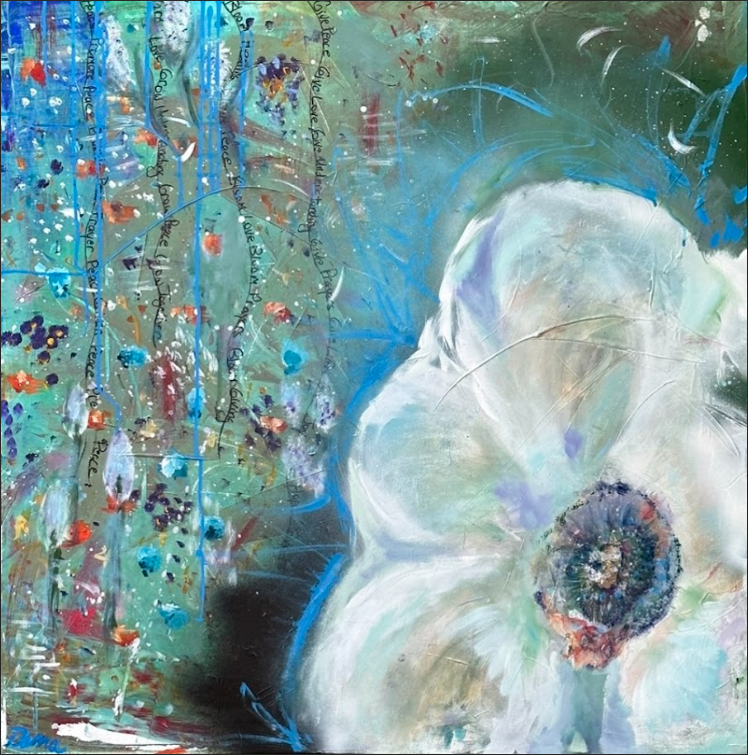
While one painting was born of the land, Peace was born of the subconscious. Inspired by a dream regarding the wars in Ukraine and the Middle East, this piece uses a large white poppy as a central beacon of hope. The smaller blooms represent the quieted voices of those lost, while the vines carry a rhythmic plea: “Bloom Love, Peace, Healing.” I intentionally placed deep shadows near the poppy to acknowledge the proximity of darkness, serving as a reminder that our commitment to peace must remain the more powerful force.
Peace by Dana Dzurko
Art stories in History
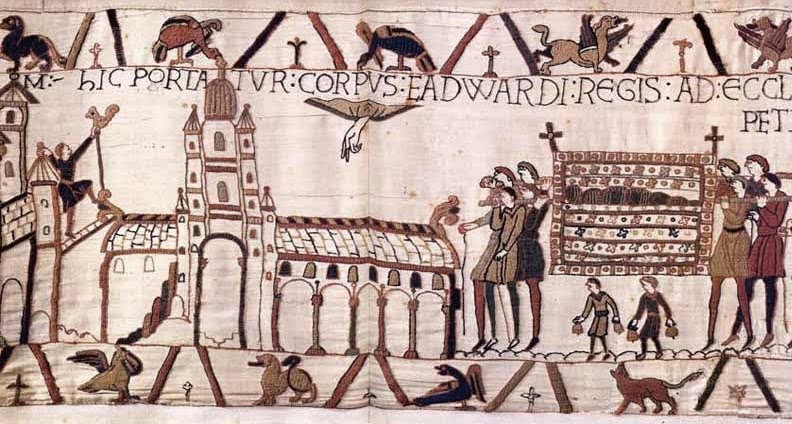
Moving from the canvas to the loom, we find one of history’s most ambitious storytellers: the Bayeux Tapestry. Spanning a staggering 70 meters, this embroidered masterpiece chronicles the high drama of the 1066 Norman invasion of England. More than just a work of art, it serves as a vivid “eyewitness” account, offering a rare window into 11th-century life, warfare, and culture. It remains one of the most vital and impressive survivors of medieval craftsmanship.
Bayeux Tapestry by Unknown
Moving from the ordered threads of the tapestry into the heart of a storm, we find The Raft of the Medusa. This masterpiece by French Romantic artist Théodore Géricault immortalizes the harrowing 1816 shipwreck of the frigate Méduse. It captures a single, agonizing moment: after thirteen days adrift and lost at sea, the remaining survivors catch a faint, desperate glimpse of a rescue ship on the horizon. It is a painting that breathes with the tension between total despair and the smallest sliver of hope.

The Raft of Medusa by Théodore Géricault
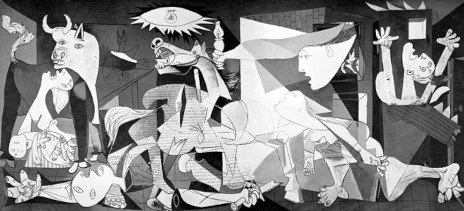
Transitioning into the 20th century, we encounter the haunting narrative of Guernica. Picasso’s 1937 masterpiece was born from the smoke and rubble of the Spanish Civil War, specifically the brutal bombing of the town of Guernica. By stripping the work of color and utilizing distorted, symbolic figures, Picasso told a story of suffering that words could never fully contain. It is a profound example of how an artist can take the “broken” pieces of history and rebuild them into a soaring, “unbroken” message of resilience.
Guernica by Pablo Picasso
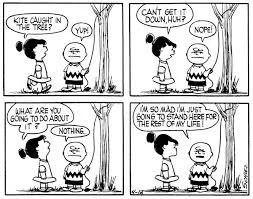
Narrative art doesn’t always require a massive canvas; sometimes, it only needs a few panels. Charles Schulz was a master of the “miniature story,” most notably through Charlie Brown and his perpetual battle with the kite-eating tree. In this lighthearted context, the kite serves as a metaphor for Charlie’s aspirations, while the tree stands as a looming representation of life’s daily frustrations. Schulz proved that even a comic strip can hold a mirror up to the human experience, finding beauty and humor in our persistent “imperfections.”
Charlie Brown by Chuck Schulz
Conclusion
We are a species defined by our voices. While we often struggle to find the right words, art allows us to convey the deepest parts of our experience through color, texture, and form. From the first pigment pressed onto a stone wall to the modern digital stroke, art remains our most honest bridge to one another. It doesn’t matter if your work is destined for a museum or a personal journal; the act of creation is a victory in itself. Embrace the messy, the “broken,” and the beautiful. Just go do it—the world is waiting for your story.